Introduction
Every authority says it wants a faster AIRAC cycle. Very few define what must never be compromised in the process. The AIRAC problem is not speed alone. It is controlled speed. ICAO Annex 15 does not reward accelerated publication if validation, traceability, and effective-date discipline are weakened on the way.
That is why many digitization projects disappoint. They improve formatting, maybe even workflow visibility, but the real control points remain outside the system: email approvals, spreadsheet trackers, manual redline reviews, and last-minute effective-date checks. The result is a modern front end sitting on top of a legacy governance model.
Where the AIRAC cycle usually breaks
- Source changes arrive in inconsistent formats from airports, procedure designers, and operational units.
- Validation is performed after drafting instead of at data origination.
- Approvals are recorded informally in inboxes instead of a governed approval chain.
- Dependencies between NOTAM, AIP amendment, and chart content are tracked manually.
- Activation checks happen too late in the cycle.
None of those problems are solved by exporting a cleaner PDF. Authorities need a controlled data chain.
What Annex 15 actually demands
Annex 15 is often reduced to publication format, but that is a shallow reading. The harder requirement is integrity across origination, validation, effective dating, and dissemination. Authorities must be able to show:
- who changed what
- when that change was validated
- which authority approved release
- which AIRAC package carried the change
- which temporary operational notices bridged any gap before publication
If those answers sit in disconnected tools, AIRAC modernization is cosmetic.
The modern operating model
A modern AIRAC workflow should be built around controlled objects, not uncontrolled documents. Every amendment item should carry provenance, validation state, approval state, target effective date, and publication dependencies. In practice that means:
- structured aeronautical records instead of freeform file exchanges
- hard validation gates before release into an AIRAC package
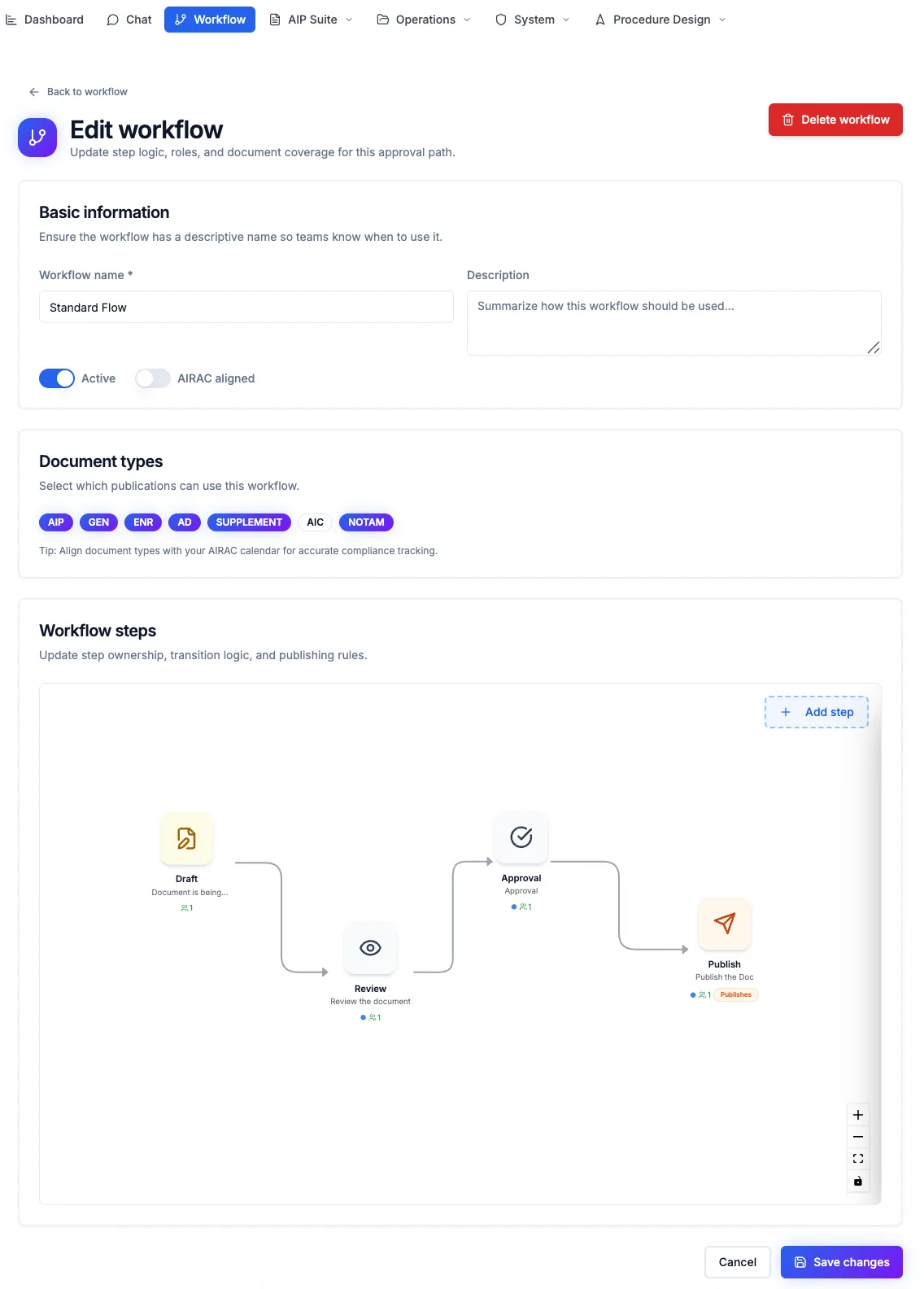
- role-based approval paths for AIS, technical review, and final authority sign-off
- release locks tied to the AIRAC calendar
- a clear bridge between urgent NOTAM action and scheduled publication
Practical migration path for CAAs
1. Stop treating the cycle as one monolithic publication event
Break the chain into origination, review, validation, approval, release, and public dissemination. The authority does not need to automate all of it on day one, but it does need to model all of it explicitly.
2. Classify every source by trust and impact
Obstacle updates, procedure changes, airspace restrictions, and contact detail edits do not deserve identical handling. High-impact items need stronger review and dependency checks.
3. Build controlled links to NOTAM workflow
A well-governed AIRAC process is not separate from NOTAM management. Temporary changes often bridge the gap until scheduled publication. If that bridge is manual, the authority loses visibility precisely where operational pressure is highest.
4. Add activation discipline
Authorities need hard activation locks, not soft reminders. If validation is incomplete or a dependency is unresolved, release should not drift into production by accident.
What modernization should deliver
- Shorter amendment preparation cycles
- Fewer late-stage publication conflicts
- Cleaner audit evidence for Annex 15 reviews
- Less dependence on individual staff memory
- Better coordination between AIS, operations, and procedure teams
Conclusion
The AIRAC cycle does not need more hustle. It needs cleaner governance. Authorities that modernize well do not sacrifice control for speed. They redesign the data and approval chain so speed becomes a byproduct of better structure. That is the difference between digitizing an AIRAC publication and governing an AIRAC cycle.
See how AviaGov eAIP supports AIRAC control or request a demo for a live workflow review.